

Conference seating is one of the most critical elements in the design of any auditorium, lecture hall, or public venue. The right seating solution directly affects comfort, visibility, space efficiency, and long-term maintenance costs. For project owners and architects, selecting the correct conference seats is not just about appearance but about durability, compliance, and functionality.
In large-scale projects, seating must perform consistently for years without failure. This is why modern conference seating solutions focus on engineering, material quality, and certified production standards.
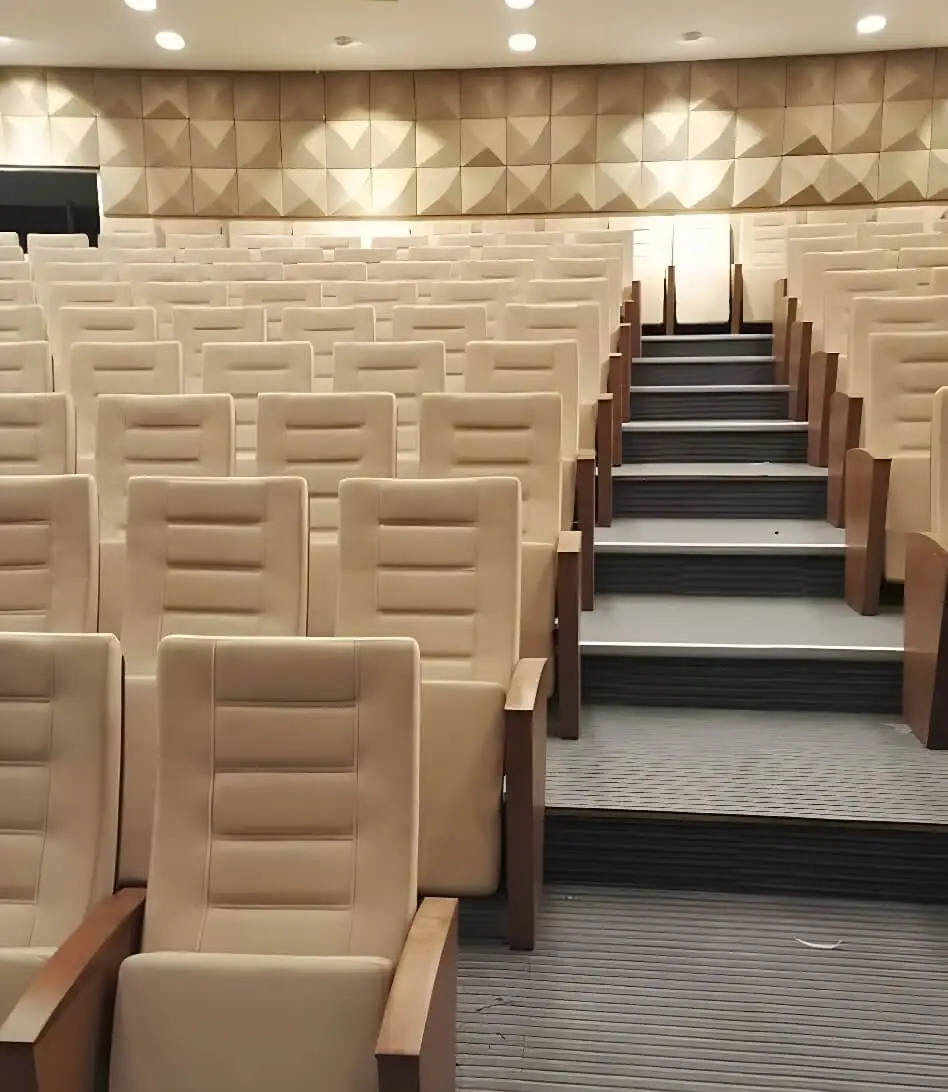
What Defines a High-Quality Conference Seating System
Not all conference seats are built for long-term use. A reliable system combines structural strength, ergonomic comfort, and resistance to heavy usage.
A well-designed conference seating system includes:
- Steel structure with electrostatic powder coating
- Molded foam for consistent comfort and shape retention
- Foldable seat mechanism for space optimization
- Durable upholstery suitable for high traffic areas
- Fixed mounting options for stepped or flat floors
In high-capacity venues, even small structural weaknesses can lead to maintenance issues. Therefore, every component must be designed for intensive use.
Conference Seating for Different Applications
Each project has its own requirements. A university lecture hall and a corporate conference room require different seating approaches.
Auditorium Seating
Auditoriums require high-density seating with perfect alignment and clear sightlines. Foldable seats are essential to maximize space efficiency and allow easy movement between rows.
University Lecture Hall Seating
Lecture halls demand durability above all. Seats are used continuously throughout the day, so materials must resist wear, deformation, and color fading. Writing tablets are often integrated into the system.
Conference Hall Seating
Conference halls focus on comfort and design. Upholstery quality and visual consistency become more important, especially in premium environments.
Fixed Seating vs. Flexible Solutions
Most large venues prefer fixed conference seating due to stability and long-term reliability.
Fixed Seating Advantages
- Strong anchoring to the floor
- Better alignment and uniform layout
- Longer lifespan with minimal maintenance
- Cleaner and more professional appearance
Flexible or movable seating may be suitable for small venues, but for large auditoriums, fixed systems remain the standard.
Importance of Ergonomics
Comfort is not a luxury in conference seating. In long sessions, poor ergonomics can lead to discomfort and reduced attention.
Proper conference seats should provide:
- Correct back support angle
- High-density molded foam
- Balanced seat depth and height
- Stable armrest positioning
Ergonomic design directly improves user experience, especially in educational and professional environments.
Materials and Upholstery Options
Material selection defines both durability and visual impact.
Common options include:
- Fabric upholstery (breathable and cost-efficient)
- Faux leather (easy to clean and modern appearance)
- Real leather (premium projects)
- Wooden or plastic back covers for protection
For public projects, stain-resistant and flame-retardant materials are often required.
Compliance and Certification
In international projects, conference seating must meet strict standards.
Typical requirements include:
- Fire resistance standards
- UV resistance for color durability
- Abrasion resistance for long-term use
- Structural strength testing
Certified seating ensures safety, reliability, and compliance with project specifications.
Space Planning and Layout Optimization
Efficient layout planning is essential to maximize seating capacity without compromising comfort.
Important factors:
- Row spacing
- Step height and depth
- Seat width
- Access aisles
Professional planning ensures both safety and optimal use of space.
Long-Term Value and Maintenance
Low-quality seating may seem cost-effective initially but leads to higher maintenance costs over time.
High-quality conference seating provides:
- Long service life
- Minimal maintenance
- Replaceable components
- Consistent appearance over years
This makes it a better investment for large-scale projects.
Conclusion
Conference seating is not just a product but a long-term infrastructure decision. The right seating system improves user experience, ensures durability, and supports the overall success of the venue.
For any auditorium, lecture hall, or conference space, selecting a well-engineered seating solution is essential for both functionality and long-term value.